An artistic resin floor can give a room its own rhythm. These two new design studies explore different ways to use flowing pigment, gloss and negative space. They are illustrative proposals for discussing a finish, rather than records of completed installations.
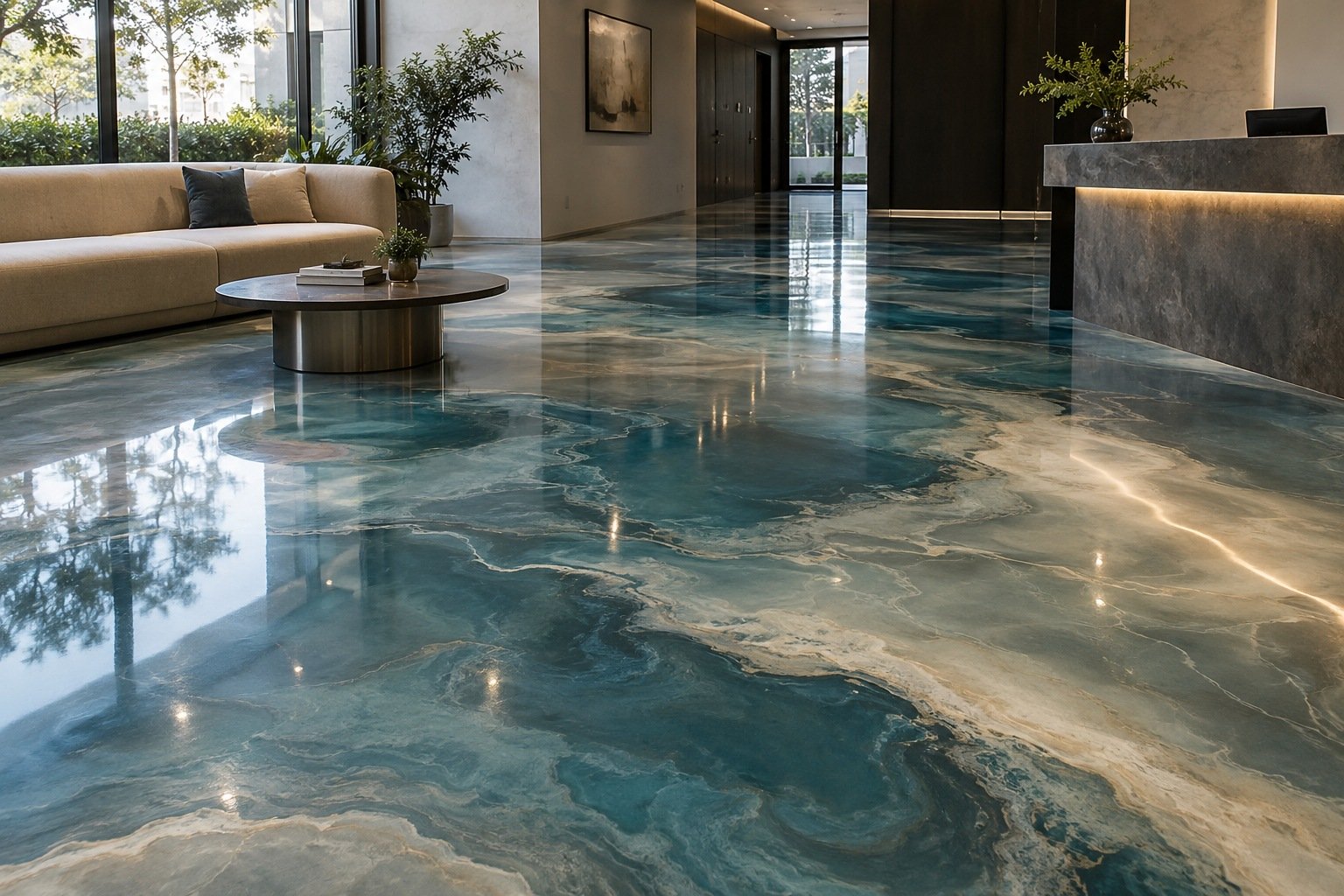
Ocean movement: petrol, teal and ivory
Muted ocean tones move through a light base, with fine warm accents connecting the colours. The pattern works as a composition across the room rather than a repeated tile. Keep surrounding materials calm and compare the colour direction against your daylight, upholstery and joinery.
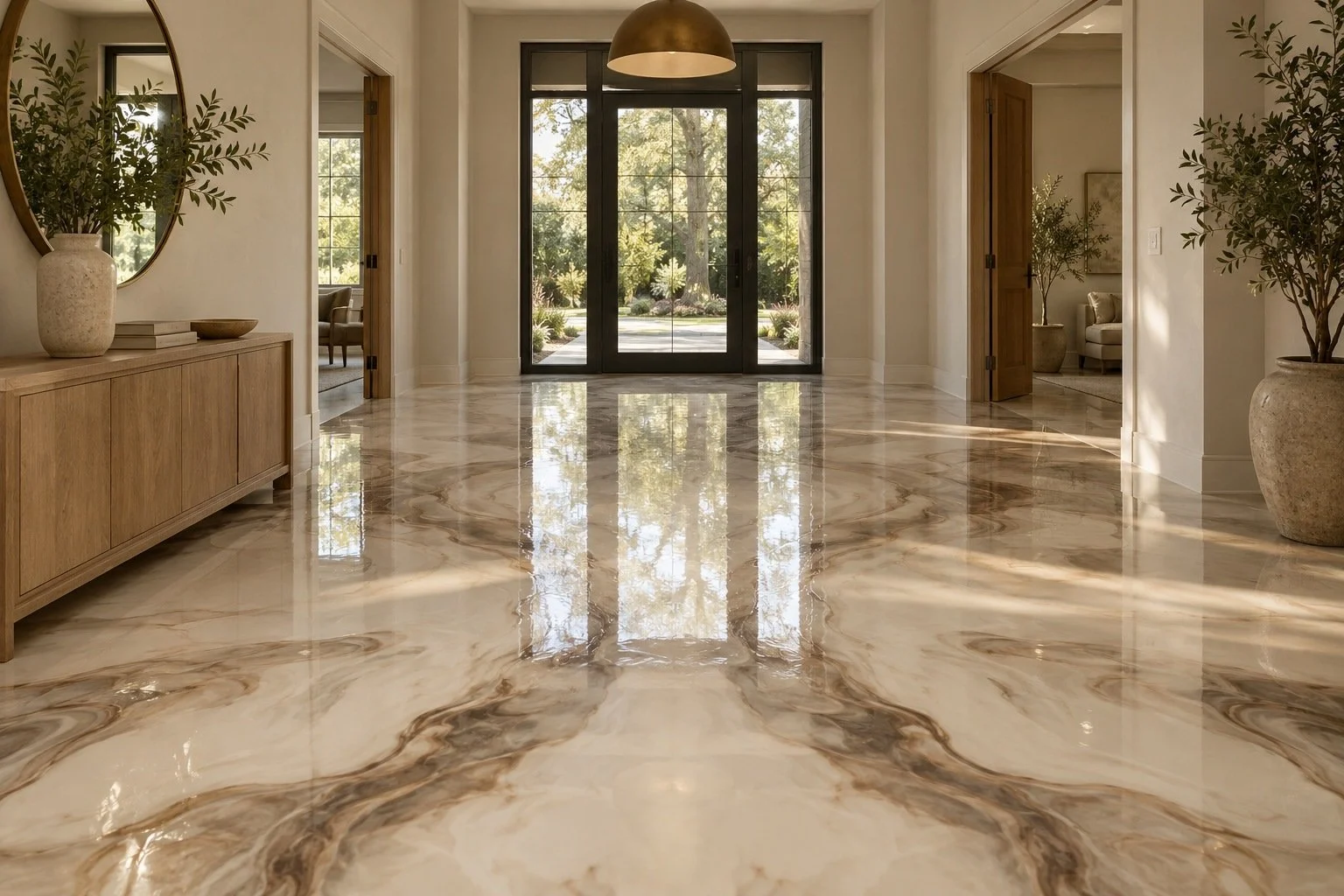
Ivory bookmatch: a considered focal composition
A warm ivory base meets smoky grey and brown movement in a mirrored arrangement. Before choosing this direction, define the main viewpoint and where the composition should open out. Doors, furniture and circulation routes influence what will actually remain visible. The study is marble-inspired resin, not natural stone.
Adapt the design to your room
Share a wide photograph taken from the entrance, a second view from the opposite side, approximate dimensions and the furniture you intend to keep. Tell us which colours you like and whether you prefer a subtle pattern or a stronger statement. The same palette can be developed with less contrast or more open space.
Resolve the finish with a physical sample
A digital study helps establish a direction. The actual colour, movement, texture and sheen are resolved through samples and the selected coating system. Assess the existing substrate, movement joints, transitions and intended use before planning an installation. Gloss changes reflections, so review the sample under the lighting that will be used in the room.
Try these ideas in your space → · Explore artistic resin finishes → · Discuss your finish →